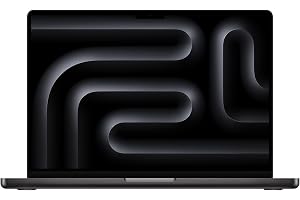
Quick Verdict: a phenomenal pick for creative pros and heavy multitaskers who need top-tier muscle, though the steep price tag means casual web surfers should definitely look elsewhere.
The Core Anatomy Under the Hood
Let's talk about what makes this machine tick, starting with the brains of the operation. The new silicon architecture relies on a robust ten-core CPU paired with a matching ten-core GPU, which handles graphical rendering with impressive smoothness. It strikes a balance between raw computing power and energy efficiency, meaning you won't hear fans screaming the second you open a demanding application.
View Deal on Amazon →
Memory bandwidth and unified memory configurations also get a nice bump, keeping your active projects snappy even when you have a dozen heavy apps open at once. Apple designed this platform to handle heavy computational loads without sacrificing battery longevity, and in practice, it easily cruises through a standard workday on a single charge. That said, if you are upgrading from an M3 or M4 machine, you might not notice a night-and-day difference in basic browser tasks, but the heavy lifting tells a totally different story.
Putting the Neural Engine to Work
One of the biggest selling points this time around is how heavily optimized the platform is for machine learning and local model execution. If you are wondering whether this hardware handles modern artificial intelligence workflows smoothly, the answer is a resounding yes. Running local language models, generating complex imagery, and processing large data sets happen remarkably fast thanks to the upgraded neural architecture.
Developers and data scientists will appreciate how quickly the system compiles code and runs predictive algorithms right on the device without needing a cloud connection. It is not just a marketing buzzword; the hardware acceleration genuinely speeds up repetitive automation and creative smart-tools. Just keep in mind that software developers are still updating their toolchains to take full advantage of every single capability, so some niche apps might require a quick update to run at peak efficiency.
Stunning Visuals on the Liquid Retina XDR Panel
You spend most of your day staring at the display, so it better be good, and Apple delivered a gorgeous visual experience here. The 14.2-inch Liquid Retina XDR screen pumps out blistering peak brightness levels, making text razor-sharp and HDR video pop with incredible contrast and deep blacks. Color accuracy out of the box is spot-on, which is a massive win for photographers and color graders who need reliable hues while working on the go.
ProMotion support means scrolling through long documents and timelines feels buttery smooth, adapting dynamically to whatever content is on the screen to save juice. The anti-reflective coating handles harsh overhead office lighting decently well, though you will still catch a faint glare if you sit directly facing a bright window. Overall, it is easily one of the best laptop screens you can buy right now, period.
Pros and Cons: The Good, The Bad, and The Pricey
Every piece of tech has its quirks, and this high-end laptop is no exception. Let's break down the main advantages and a few drawbacks so you can weigh what matters most to your daily routine.
- Blistering graphics capability: The ten-core GPU chews through 4K video timelines and 3D rendering tasks without stuttering.
- All-day battery stamina: You can reliably squeeze around 12 to 15 hours of mixed productivity out of a single charge.
- Stunning display quality: The high-brightness panel makes working outdoors or editing HDR content a breeze.
- Limited upgradeability: What you buy on day one is what you are stuck with forever, as RAM and storage cannot be upgraded later.
- Premium pricing: Apple tax is real, and entry-level configurations still require a serious financial commitment.
Who Should Buy It and Who Should Pass
If your daily grind involves heavy video editing, software engineering, music production, or running complex local machine learning workflows, this machine will pay for itself in saved time. It is built for professionals who demand desktop-class performance in a chassis that easily slides into a backpack. The thermal management is quiet enough for coffee shops and powerful enough for a studio desk setup.
On the flip side, if your daily computer use consists of checking email, streaming movies, and writing documents, you are massively overpaying. A base-model Air or an older generation machine will handle those tasks just as well for a fraction of the cost. Skip this if your budget is tight or if your software ecosystem is strictly tied to legacy Windows applications that do not translate well to ARM architecture.
Weighing the Cost Against the Value
Let's address the elephant in the room: Apple hardware is notoriously expensive, and maxing out the storage and memory specs gets downright terrifying for your bank account. However, when you factor in the build quality, the resale value, and the sheer amount of time saved during heavy rendering jobs, the investment starts to make sense for working professionals. It is a premium tool designed to make money, not just a casual browsing device.
Cheaper alternatives exist in the Windows ecosystem, but few match the trackpad precision, speaker quality, and battery consistency found here. If you view your laptop as a long-term business asset that you will use heavily for the next four to five years, the price tag becomes a lot easier to swallow. Just be sure to buy the right amount of internal storage upfront since you cannot open it up to add a larger drive later.
Frequently Asked Questions
Does it get loud during heavy rendering sessions?
The internal fans will kick on when you push the GPU and CPU to their absolute limits, but they remain remarkably quiet compared to traditional gaming laptops and rarely sound like a jet engine.
Can I connect multiple external displays?
Yes, depending on the specific configuration and lid status, you can drive multiple external monitors, making it easy to drop into a multi-screen desktop station at home or in the office.
Is the base storage enough for video editing?
The entry-level storage fills up fast if you work with raw 4K footage, so we strongly recommend stepping up to a higher tier or budgeting for a fast external SSD if you shoot heavy media files.
Verdict
The latest iteration of Apple's flagship pro laptop proves that raw performance and great battery life can coexist in a slim, portable chassis. It handles heavy creative tasks and modern computational workflows with ease, wrapped in one of the best displays on the market. Ready to upgrade your workflow? Check out the current pricing and configuration options online to find the exact setup that fits your professional needs.