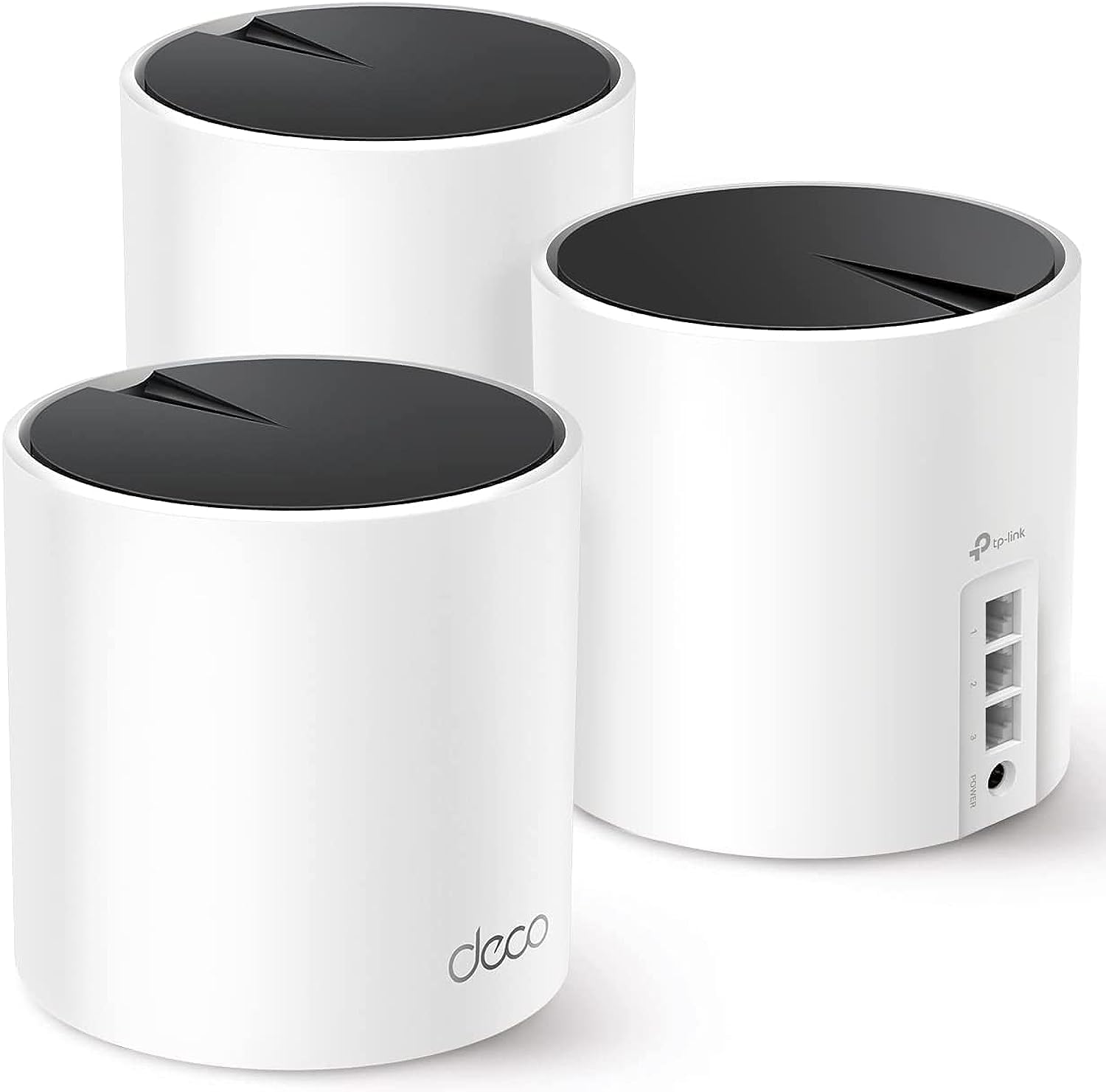
Quick Verdict: a solid pick for larger properties if you want fast WiFi 6 speeds without breaking the bank; skip it if you need multi-gigabit wired backhaul ports or advanced enterprise routing controls.
Introduction to the TP-Link Deco X55
Stepping up your home network doesn't have to require an engineering degree or a massive budget. The TP-Link Deco X55 3-pack review 2026 highlights a hardware package designed to sweep through typical suburban houses and erase frustrating drop-offs for good. Instead of relying on a single, overworked router sitting in the living room, this system spreads the workload across three sleek, cylindrical units that talk to each other seamlessly.
View Deal on Amazon →
Setting up a whole-home blanket of signal used to mean wrestling with complex IP addresses and mismatched extender names. Thankfully, modern mesh kits have streamlined that entire process so anyone can get online in minutes. This particular hardware bundle aims right for the sweet spot between high-end performance and everyday usability, making it a natural choice for families who are tired of buffering wheels on their favorite shows.
Key Features and Specifications
Under the hood, these units pack serious punch with dual-band AX3000 speeds capable of pushing up to 2402 Mbps on the 5GHz band and 574 Mbps on the 2.4GHz band. That means heavy data tasks like downloading large console games or streaming 4K video won't choke your bandwidth. Each node also features three gigabit Ethernet ports on the back, giving you plenty of flexibility to plug in hardwired gear like desktop PCs or smart TV streaming boxes.
Physical dimensions matter when you are placing tech around the house, and these nodes measure about 4.3 inches wide and 6.4 inches tall, sporting a clean white finish that blends easily onto a bookshelf. They lean heavily on Wi-Fi 6 technology, bringing features like OFDMA and MU-MIMO to handle dozens of connected clients concurrently. The catch? They lack dedicated tri-band backhaul, meaning the nodes share the same frequency bands for talking to your devices and talking to each other.
Living with a mesh network reveals its true character far better than spec sheets ever could. In a typical two-story layout, spreading the three units across the main floor, upstairs hallway, and downstairs office results in full-bar signal everywhere, even out on the back patio. How to eliminate dead zones with Deco X55 comes down to smart node placement—keeping them within reasonable line-of-sight lets the system negotiate fast handoffs as you walk around with your phone.
Streaming a live sports broadcast while someone else downloads a massive software update usually brings standard routers to their knees. During heavy testing with over thirty active devices—ranging from security cameras to tablets—the network maintained steady pings and smooth video delivery without a hiccup. Roaming from the kitchen to the bedroom happens instantly, with your device shifting nodes in the background without dropping a single packet of data.
Pros and Cons
Weighing the advantages and drawbacks helps clarify whether this hardware fits your specific living situation. It's not a magical fix for every single networking woe, but it hits far more targets than it misses.
- Delivers massive coverage up to 6,500 square feet with three units
- Intuitive smartphone app makes installation a breeze
- Solid Wi-Fi 6 speeds that easily handle busy multi-device homes
- Sleek, unobtrusive design that doesn't scream tech gear
- Gigabit ports on every unit for wired device connections
On the flip side, advanced users might find the web management interface a bit too locked down compared to dedicated standalone routers. The lack of a dedicated wireless backhaul channel can occasionally shave off some top-end speed when multiple nodes are daisy-chained across a large footprint. Furthermore, the power bricks are slightly bulky, which might crowd your wall outlets if space is tight behind a heavy piece of furniture.
Who It's For and Who Should Skip It
If you live in a sprawling ranch-style house or a multi-level townhome with thick plaster walls, this kit is basically tailor-made for your layout. Families with a growing ecosystem of smart home sensors, phones, laptops, and streaming sticks will appreciate how effortlessly the hardware juggles heavy traffic. It is also fantastic for remote workers who need a rock-solid connection in a home office far away from the main cable modem.
On the other hand, if you live in a cozy one-bedroom apartment, a three-pack is absolute overkill and a waste of potential bandwidth. Hardcore network tinkerers who love configuring custom VLANs, advanced routing tables, or third-party firmware will also want to look elsewhere. Finally, homes with pre-installed multi-gig fiber internet might feel limited by the standard gigabit ethernet ports on these units.
Value for Money
Finding an affordable WiFi 6 mesh system 2026 that doesn't feel cheap or unreliable can be a real balancing act. At its typical retail price point, getting three high-performance AX3000 nodes represents a stellar investment for anyone looking to cure chronic connection drops. You get modern Wi-Fi standards and robust coverage without paying enterprise-tier prices.
Cheaper single-pack extenders often create frustrating secondary networks that require manual switching, turning a budget fix into a daily annoyance. By investing in a cohesive three-node ecosystem, you eliminate those headaches entirely and future-proof your household for the next several years. It punches well above its weight class in pure dollar-per-gigabit value.
Frequently Asked Questions
Can I use a wired backhaul connection with these nodes?
Yes, you can plug Ethernet cables between the nodes if your home has wired wall jacks, which frees up wireless bandwidth for your devices.
Do I need a separate modem to use this system?
Yes, these units act as routers and mesh satellites, so you will still need a cable modem or fiber ONT provided by your internet service provider.
Is a subscription required for parental controls?
Basic parental controls like pausing internet access and blocking specific websites are free, though advanced security features may require a paid tier.
Verdict
The TP-Link Deco X55 delivers reliable, fast, and widespread wireless coverage that easily rescues large households from endless buffering and dead spots. While advanced tech enthusiasts might crave deeper customization options, the sheer ease of use and rock-solid daily stability make it an easy recommendation. If you are ready to fix your internet problems once and for all, head over to check out the current pricing and bundle deals available right now.